Europe’s Post-Trade Problem: A conversation with Matthias Voelkel
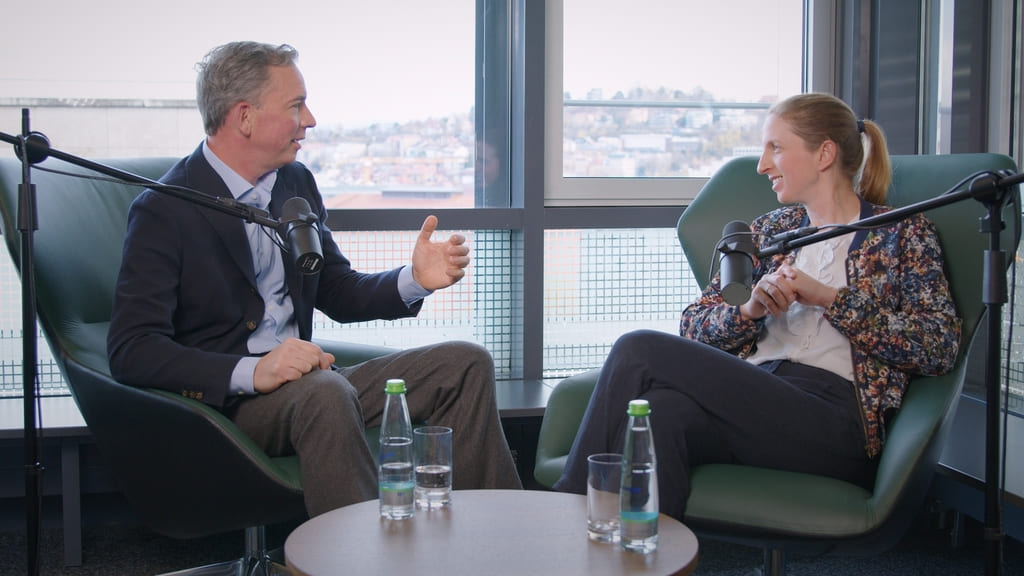
In the opening episode of Inside Digital Assets, host Lidia Kurt (CEO of BX Digital and Seturion) speaks with Dr. Matthias Voelkel (CEO of Börse Stuttgart Group) about tokenization in capital markets, post-trade settlement, and why Europe’s market infrastructure remains highly fragmented.
The episode is in English.
The conversation connects strategic perspective with operational reality: T+2 settlement cycles, high post-trade costs, and complex cross-border processes. Matthias and Lidia outline a target state in which trading can largely remain unchanged and off-chain, while the settlement layer evolves, leveraging DLT (Distributed Ledger Technology) towards a more open, pan-European model.
The core challenge: a fragmented European capital market
A central theme of this episode is the fragmentation of Europe’s capital markets. In contrast to the US, Europe’s infrastructure has historically grown in national silos. This makes cross-border activity harder and limits the benefits of scale and competition.
Matthias describes fragmentation not only as a structural issue, but as a concrete obstacle that affects efficiency and increases investment costs. Lidia adds that Europe’s post-trade landscape compared to more integrated markets creates measurable friction and costs.
What this means in practice: settlement is slow and expensive
The episode takes a closer look at post-trade, where many inefficiencies are especially visible:
- Settlement can still take T+2 in many contexts.
- Cross-border settlement is particularly expensive and complex because multiple intermediaries are involved.
- The cumulative cost of infrastructure ultimately affects investors through more friction, higher fees, and additional hurdles for cross-border investing.
They also place these operational issues in a broader economic context: reducing friction and costs support capital formation, financing for innovation, and long-term wealth creation especially through stronger retail investor participation.
The “window of opportunity”: political tailwinds meet new technology
Matthias explains why deep structural change tends to happen only when two forces align:
- Political tailwinds: renewed focus on the Capital Markets Union and more integrated European capital markets.
- Technological change: DLT as an enabler for inherently cross-border infrastructure that depends less on national CSD silos.
The message is clear: innovation in market infrastructure succeeds only when it is “market-ready” at the right time – technologically, operationally, and within the regulatory framework.
The target state: keep trading unchanged, modernize the settlement layer
A key operational point is that the industry does not need to “rebuild everything from scratch” to make progress.
Lidia describes a target state in which trading remains off-chain and largely unchanged, while post-trade settlement (Delivery-versus-Payment, DvP) becomes more efficient. This includes:
- Settlement as a central service layer (DvP)
- Flexibility on the cash leg: integration of traditional payment rails and digital cash options (e.g., stablecoins)
- A pragmatic adoption path in which participants can connect via existing rails rather than undergoing a full technology transformation from day one
The episode clearly differentiates between settlement (where efficiency gains are most meaningful) and trading (which already works well across many platforms and does not necessarily need to move on-chain).
Open architecture: a pan-European industry solution, not a closed ecosystem
Both emphasize the importance of open architecture. The target discussed is not a vertical “single-vendor silo”, but a settlement layer that different market participants and trading models can connect to including exchanges, MTFs, and bilateral/OTC flows.
Adoption will depend on solutions that:
- are technologically pragmatic (not ideologically driven)
- remain compatible with existing market structures
- lower operational and regulatory barriers to entry for participants
Outlook: what could capital markets look like in 5–10 years?
Looking ahead, Matthias and Lidia describe a future in which market infrastructure becomes:
- more European (fewer silos, more interoperability)
- more efficient (faster settlement, fewer unnecessary layers)
- simpler for cross-border participation
At the same time, they acknowledge that certain roles and functions remain essential for stability and market integrity. The goal is not to remove stability mechanisms, but to reduce post-trade complexity and cost.
Key takeaways
- Europe’s capital markets are fragmented, increasing post-trade costs and complicating cross-border settlement.
- Settlement can still be T+2, delaying finality and liquidity availability.
- DLT opens the opportunity for a more open, pan-European settlement layer.
- Trading can remain off-chain while post-trade settlement becomes more efficient through a modernized settlement layer.
- Lower infrastructure costs ultimately benefit investors, through reduced friction and improved access.
Guest: Dr. Matthias Voelkel, Group CEO, Börse Stuttgart Group
Host: Lidia Kurt, CEO, BX Digital and Seturion
Inside Digital Assets is a joint project by BX Digital and Seturion, exploring tokenization, digital assets, and the technologies shaping the future of capital markets.
More news from BX Digital
How banks use tokenization: custody, settlement, and European standards. Podcast with Erik Haubold (UniCredit) on DLT infrastructure and new use cases.

In this episode of Inside Digital Assets, Ian de Bode of Ondo Finance, explains how tokenization brings traditional financial assets such as U.S. Treasuries, stocks, ETFs, on-chain as tokenized securities.