How Tokenization Is Moving from Concept to Capital Markets Infrastructure
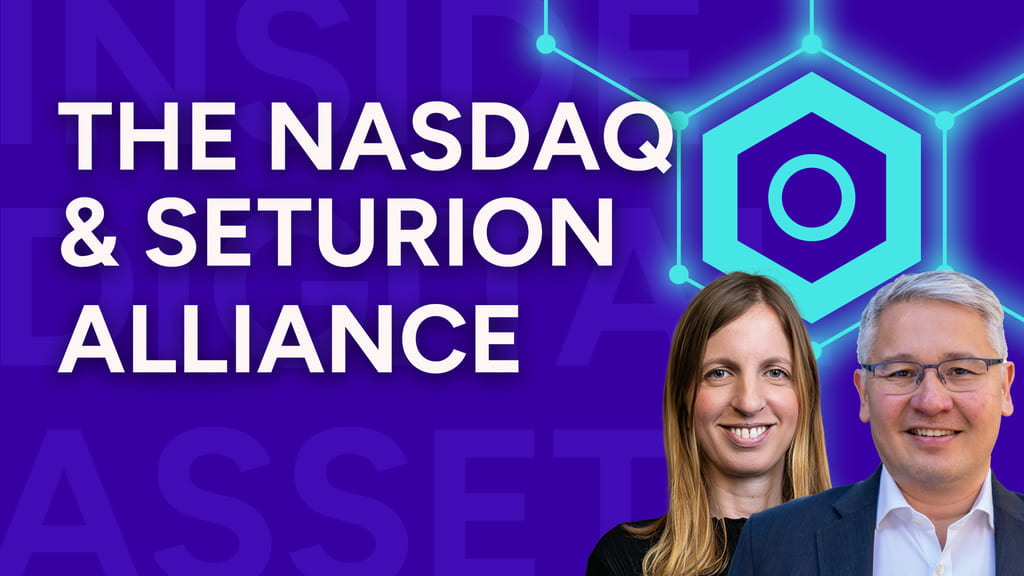
Tokenization is no longer primarily a conceptual discussion for capital markets. In the latest episode of Inside Digital Assets, Lidia Kurt speaks with Roland Chai, President of European Market Services at Nasdaq and Global Head of Digital Asset Initiatives, about how tokenized assets, DLT and regulated digital market infrastructure are moving towards adoption in institutional finance.
The conversation focuses on a central shift: blockchain and distributed ledger technology are increasingly being considered not only as technologies for individual crypto assets, but as infrastructure layers for post-trade processes, collateral management, asset servicing and regulated securities markets.
Tokenization and DLT in capital markets
In the discussion, tokenization is described as the digital representation of assets on distributed ledger technology. DLT enables assets and related rights to be recorded, transferred and managed across shared digital infrastructure. According to Roland Chai, the main impact of tokenization is not necessarily in changing how trading itself works, but in improving the end-to-end value chain around securities.
He points in particular to post-trade processes, collateral, balance sheet securities and asset workflows. Programmable assets and smart contracts can support more efficient asset servicing and lifecycle management, provided they are embedded in robust regulatory and operational frameworks.
Why structured products are a starting point
A key topic of the episode is the collaboration around digital market infrastructure in Europe. Roland Chai explains that structured products are a relevant asset class for early implementation because issuance across multiple European jurisdictions remains fragmented and costly.
In markets such as Denmark, Finland and Sweden, different central securities depositories still exist despite harmonised trading and listing environments. For issuers, this means that a product may need to be issued separately in each market. Tokenization could help create a more scalable framework, allowing assets to be issued and managed more efficiently across markets.
This makes structured products a practical starting point for regulated tokenized assets: the ecosystem is comparatively ring-fenced, involves identifiable issuers, market makers and distribution points, and offers potential efficiency gains in issuance and market access.
Digital assets, crypto infrastructure and regulated markets
The episode also compares developments in Europe and the United States. Roland Chai outlines Nasdaq’s work on an issuer-approved equities token framework in the US, where tokenized securities are intended to be fungible with the underlying security and operate within the regulated market framework.
The discussion also addresses the partnership with Kraken. According to Roland Chai, one important objective is to connect digital-native market infrastructure with the liquidity, transparency and price discovery of established regulated markets. The aim is not to create parallel liquidity pools, but to bring different infrastructures closer together over time.
Interoperability as a condition for scale
A recurring theme is the risk of new silos. Roland Chai stresses that fungibility and interoperability are essential if tokenized markets are to scale. Tokenized assets should be transferable across wallets, custody environments, central securities depositories and potentially different networks.
Standards are therefore central to the development of digital assets. The episode refers to industry efforts around standardisation involving institutions such as DTCC, Euroclear and Clearstream, as well as technical compatibility across environments such as EVM, Canton and FIX.
From experimentation to adoption
Roland Chai sees a clear change in market dynamics. While much of the past five years was dominated by proofs of concept and experimentation, he now observes a move towards implementation and scaling. In his view, broker dealers, market makers, ETF issuers and institutional asset managers increasingly have prioritised plans for tokenizing assets and collateral.
However, the episode also makes clear that broad adoption will take time. Regulatory regimes, legal certainty, investor education and operational resilience remain crucial. Artificially limited sandboxes may not be sufficient for scaling digital market infrastructure. For Europe in particular, Roland Chai points to the need to move beyond existing frameworks such as MiCA and the DLT Pilot Regime towards broader institutional adoption.
Key takeaways
The episode highlights tokenization as an infrastructure topic rather than a short-term market trend. For regulated capital markets, the relevant question is not only which assets become tokenized, but how digital securities can be traded, held, settled and serviced in a safe, interoperable and legally robust way.
For BX Digital and other market infrastructure providers, the discussion underlines the importance of regulated trading, post-trade innovation Blockchain-based infrastructure and collaboration across jurisdictions. Tokenization may develop gradually and remain hybrid alongside traditional systems for several years, but the direction of travel is increasingly focused on adoption, scale and institutional use.
FAQ
More news from BX Digital
Nasdaq’s Roland Chai discusses tokenized assets, DLT, regulated trading and the future of digital market infrastructure.
BX Digital and Chainlink discuss tokenized assets, blockchain data, DLT infrastructure and the future of capital markets.