Solving the Digital Islands Problem – a conversation with Frank Frank Seibold, Chainlink
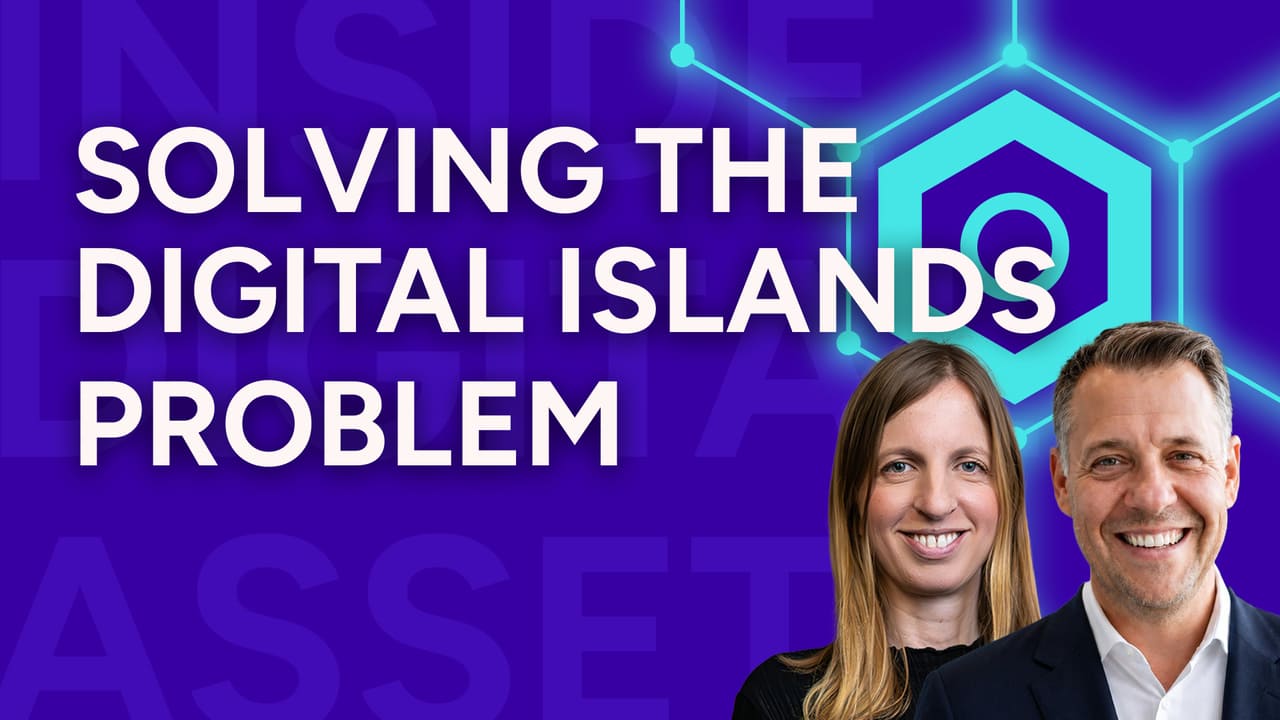
Tokenization is moving from experimentation to market infrastructure. In the latest episode of Inside Digital Assets, Lidia Kurt speaks with Frank Frank Seibold, Managing Director and Global Head of Banking and Capital Markets at Chainlink, about the data, interoperability and orchestration layers needed for digital assets to become usable in institutional capital markets.
The discussion focuses on a central question: once an asset has been tokenized, what creates its real utility? According to Frank Seibold, the answer lies not only in representing assets on a blockchain, but in enabling them to be priced, transferred, settled and risk-managed in real time.
Tokenized Assets Need Reliable Data
A recurring theme in the conversation is the so-called oracle problem. In blockchain systems, smart contracts can only execute correctly if the data they receive is accurate, reliable and protected from manipulation. Chainlink’s core role, Frank Seibold explains, is to provide trusted data to smart contracts and blockchain-based systems.
This includes price data, net asset values and other financial reference data. In institutional markets, unreliable data can create operational and financial risk. For tokenized assets, the issue becomes even more important because blockchain transactions can settle with finality and without the same manual intervention common in traditional finance.
From Reconciliation to a Shared Source of Truth
The podcast also covers Chainlink’s work around smart NAV and corporate actions. Smart NAV refers to the publication of net asset values in a way that allows multiple market participants to reference the same verified data source on-chain.
Frank Seibold describes this as a shift from manual reconciliation across fragmented systems towards a shared “golden source of truth”. The same logic applies to corporate actions, where fragmented information can lead to different versions of the same event across brokers, asset managers and other intermediaries.
In the episode, he refers to a corporate actions initiative with DTCC and 24 participating institutions. The objective was not simply to make reconciliation faster, but to show how verified data distributed through a common layer could reduce the need for reconciliation altogether.
Interoperability Between Traditional Finance and Blockchain
A second major topic is interoperability. As digital assets develop, financial institutions are unlikely to operate on a single blockchain or replace legacy systems overnight. Instead, traditional finance and blockchain-based infrastructure are expected to coexist.
Frank Seibold describes Chainlink as an infrastructure layer designed to connect systems, rather than choosing one blockchain over another. He highlights the Chainlink Runtime Environment, or CRE, as an orchestration layer between traditional finance platforms and on-chain environments. The goal is to help institutions avoid dozens of separate integrations and instead use middleware that connects workflows across systems.
The discussion also touches on Chainlink’s CCIP, a cross-chain interoperability protocol intended to connect liquidity and assets across fragmented blockchain ecosystems.
Regulated Digital Market Infrastructure and BX Digital
For BX Digital, the episode is particularly relevant because it addresses the foundations of regulated digital market infrastructure: trusted data, interoperability, settlement, compliance and operational resilience. Kurt notes that BX Digital plans to publish exchange-generated data to Chainlink, underlining the importance of reliable data feeds for digital securities and tokenized assets.
The conversation also explores how regulatory developments, especially in the US, are influencing institutional adoption. Frank Seibold argues that clearer rules can help move projects from pilots into production, particularly in areas such as stablecoins, tokenized deposits and on-chain market structures.
Key Takeaways
The episode makes clear that tokenization alone is not enough. For digital assets to become useful in capital markets, they need reliable data, regulated trading environments, interoperability and integration with existing financial systems. The likely future is not an abrupt replacement of traditional finance, but an accelerated convergence between existing infrastructure and DLT-based systems.
FAQ
More news from BX Digital
Nasdaq’s Roland Chai discusses tokenized assets, DLT, regulated trading and the future of digital market infrastructure.
BX Digital and Chainlink discuss tokenized assets, blockchain data, DLT infrastructure and the future of capital markets.