Tokenized Securities: Why Cash on-Chain Matters
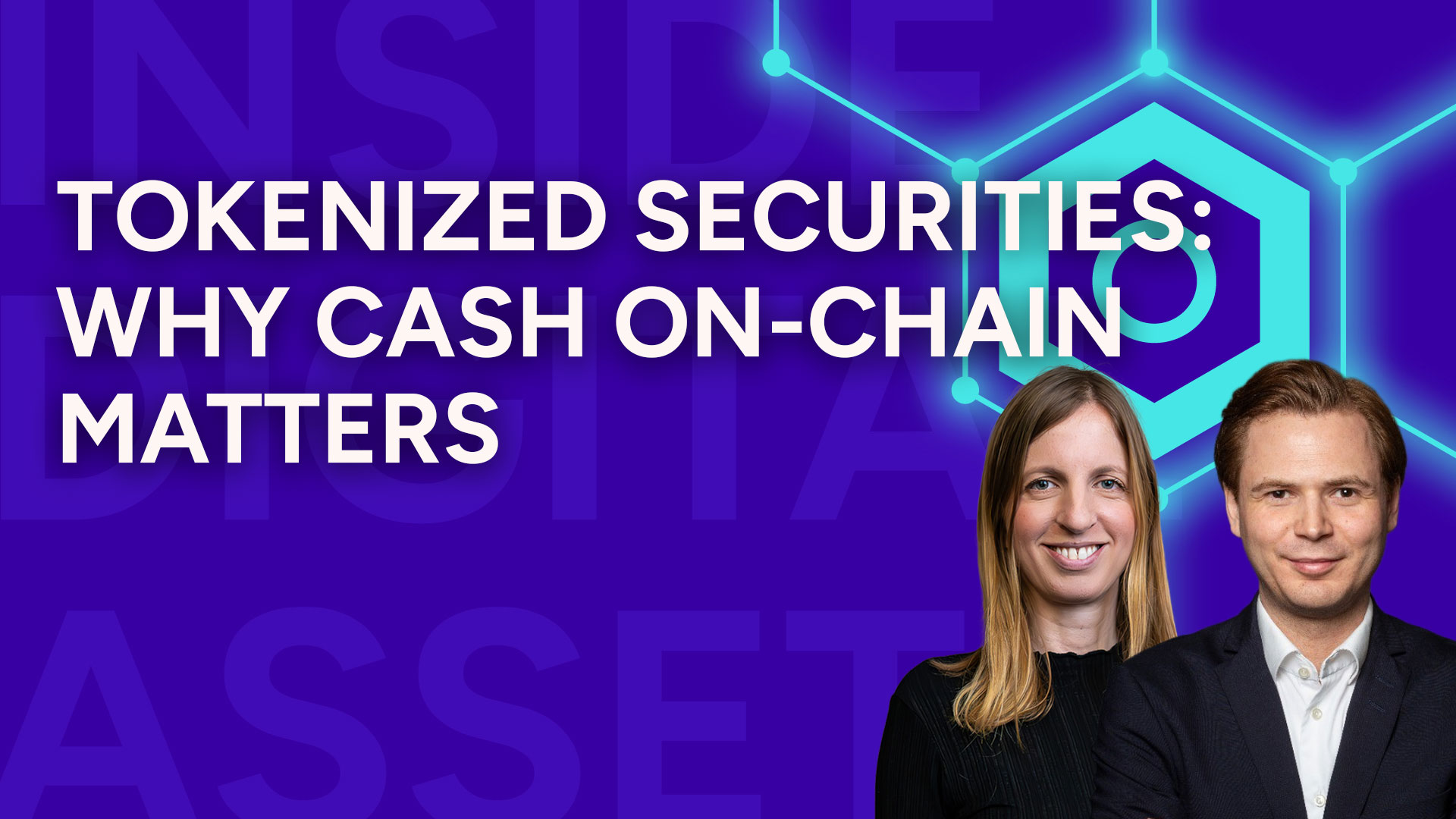
Tokenized securities are moving from experimentation to real-world implementation. In Episode 5 of Inside Digital Assets, Lidia Kurt speaks with Markus Fehn, Head of Strategy & Innovation at Chartered Investment, about practical use cases, operational benefits and why cash on-chain is a key building block to scale tokenization.
The conversation shows how traditional structuring and issuance can connect with tokenized workflows and which topics are currently shaping the market most.
What the episode covers:
Markus Fehn explains how Chartered Investment supports professional clients in structuring and issuing investment products, both in traditional form and in tokenized form. The discussion focuses on three core product areas:
- Actively managed products
- Real world asset products (less liquid underlying assets)
- Classic structured notes (combining a bond and an option)
Two main drivers for tokenization stand out:
- Lifecycle efficiency: simplifying issuance, administration, settlement, accounting, and reporting.
- Accessibility and distribution: enabling broader market reach and new distribution channels over time.
Real-world use cases: Gold, real estate, and funds
The episode goes beyond theory and discusses concrete projects:
Physically backed tokenized gold (“Green Gold”)
A key example is a Gold Note backed by physical gold stored in Switzerland, with additional ESG characteristics. The conversation highlights how such a product can sit between classic gold trackers and crypto-asset constructs, aiming for a regulated setup with clear lifecycle management.
Tokenized real estate debt structures
Chartered Investment sees demand from the real estate sector, primarily via tokenized debt formats. The focus is less on “having a token” and more on creating a seamless end-investor experience and more efficient processes.
Tokenized investment funds on-chain
Beyond tokenized money market funds, asset managers increasingly ask how to bring broader investment strategies on chain in a robust and compliant way.
Key theme: Cash on chain and regulated stablecoins (EMT)
A recurring point in the episode is cash on-chain. Markus Fehn explains that early tokenization projects were conceptually strong, but operationally limited without on chain settlement money.
This is where regulated stablecoins come in, especially Electronic Money Tokens (EMTs) under MiCA. The value is not only faster settlement but also programmability: payment flows such as coupon payments, dividends, and settlement logic can be automated and enforced by rules across the product lifecycle.
What still slows down scale
The episode highlights two core roadblocks:
- Legal fragmentation – Different national frameworks can slow cross-border scaling, especially for issuance and listing of tokenized instruments.
- Market standards – In addition to technical standards, the market needs aligned conventions: data fields, token logic, interoperability, and legal standardization to reduce repetition and improve reliability.
Subscribe to our Spotify channel so you don’t miss a new episode of Inside Digital Assets!
More news from BX Digital

Nasdaq’s Roland Chai discusses tokenized assets, DLT, regulated trading and the future of digital market infrastructure.
BX Digital and Chainlink discuss tokenized assets, blockchain data, DLT infrastructure and the future of capital markets.