Tokenization and New Infrastructure: Dirk Grunert from Morgan Stanley in Conversation
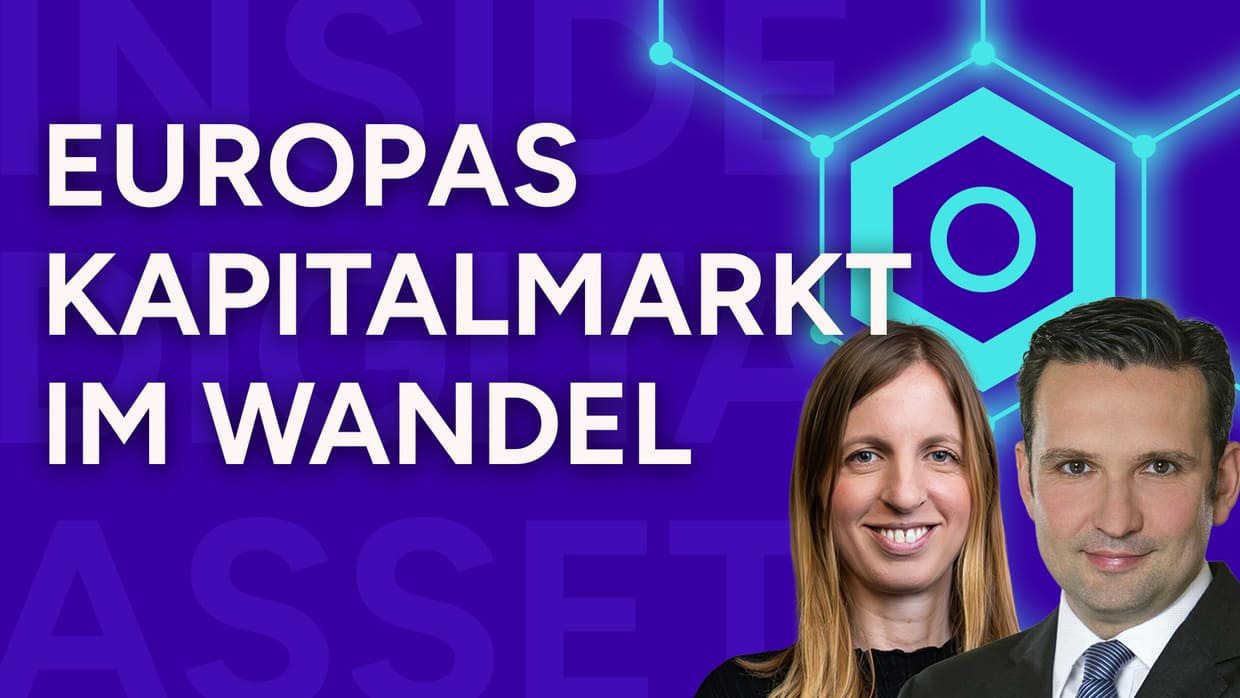
In the latest episode of “Inside Digital Assets”, the podcast by BX Digital and Seturion, Lidia Kurt, CEO of BX Digital and Seturion, speaks with Dirk Grunert, Managing Director at Morgan Stanley, about the future of capital markets. The discussion focuses on tokenization, digital assets, structured products, settlement, and the question of why Europe’s capital market needs new infrastructure.
Dirk Grunert explains that structured products and derivatives essentially serve to distribute and hedge risks. Institutional investors, insurance companies, pension funds and corporates use these instruments to manage market risks in a targeted way.
Another key topic is technological change in banking. Grunert looks back at CRT monitors on the trading floor, stamped trade cards and a time before smartphones and online banking. This development shows that technology has transformed capital markets several times before — and tokenization could be the next major step.
Why Market Infrastructure Needs to Be Modernized
Many of today’s securities processes are still based on historically grown structures. The custody, booking and settlement of securities have long been digitalized, but they still follow established system logic that is, in some cases, decades old. This is one reason why settlement processes in Europe still take time.
Tokenization and distributed ledger technology could help represent securities and other assets more efficiently, transparently and at scale. In the future, digital assets could be transferred faster, settled more easily and made available beyond traditional trading hours.
The Transition Between the Old and New World
Dirk Grunert emphasizes that this transition cannot happen overnight. Existing market infrastructures cannot simply be switched off. Instead, a transition phase is needed in which traditional securities and tokenized assets function in parallel.
For banks, issuers and market participants, this initially means investment and added complexity. In the long term, however, it can create efficiency gains, lower costs and new business models.
New Opportunities Through Digital Assets
Tokenization is not limited to traditional securities. Assets such as art, infrastructure or other previously hard-to-access assets could in future be digitally represented, fractionalized and made investable. This also changes the way we think about wealth, particularly in private wealth management.
For banks, this creates new services around digital assets, structuring, trading, custody and settlement.
Europe’s Capital Market in Focus
A central theme of the episode is the fragmentation of Europe’s capital market. Different national rules and market structures make cross-border scaling more difficult. A unified, pan-European settlement infrastructure could help make processes more efficient and strengthen the competitiveness of Europe’s capital market.
The episode shows that tokenization is not just a technology topic. It is also a question of infrastructure, standards and scalability.
Conclusion
The conversation with Dirk Grunert highlights that digital assets and tokenized securities can be key building blocks for the further development of capital markets. Modern settlement infrastructure, interoperable systems and a more integrated European capital market will be crucial to unlocking new efficiency potential and business models.
Inside Digital Assets offers a concise insight into the future of tokenization, digital assets and capital market infrastructure.
Subscribe to our Spotify channel so you don’t miss any new episodes of Inside Digital Assets!
More news from BX Digital
Nasdaq’s Roland Chai discusses tokenized assets, DLT, regulated trading and the future of digital market infrastructure.
BX Digital and Chainlink discuss tokenized assets, blockchain data, DLT infrastructure and the future of capital markets.